Non-attended PSG with TcCO2 monitor at Home/Hotel/Hospital
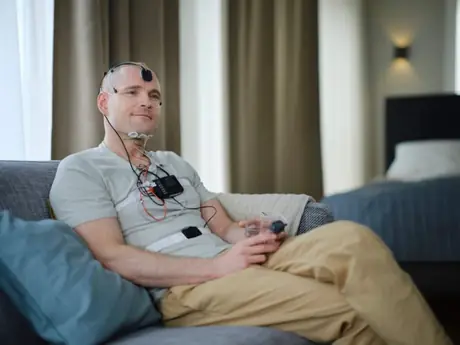
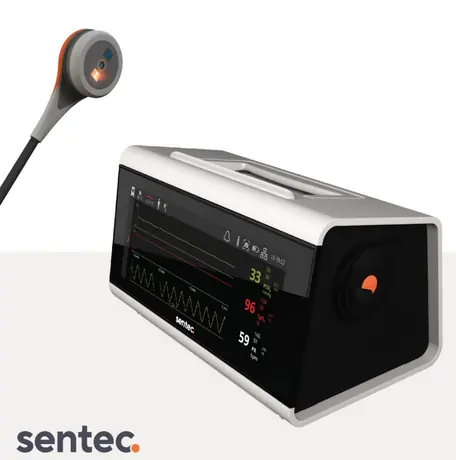
The O2 SleepWell Laboratory, in collaboration with the O2 Lung Centre, provides an advanced remote sleep assessment utilizing the Nox A1s PSG recorder and the specialized Sentec tCOM+ monitor. This service allows you to undergo a comprehensive diagnostic evaluation of your sleep health while resting in a familiar environment, such as your home, a hospital, or a hotel. This assessment is a high-quality alternative to traditional in-lab testing.
What Is It?
This is a comprehensive, unsupervised sleep study, known as an unattended diagnostic Polysomnography (PSG) or Level II stud. It uses portable, dedicated monitoring systems like the lightweight Nox A1s device and the Sentec tCOM+ to capture extensive physiological data overnight. Although the test is unattended during the night, it records detailed information, often mimicking the scope of data collected during an in-lab study.
Why Choose O2 SleepWell Laboratory for This Service?
O2 SleepWell Laboratory ensures professional oversight and accurate data for specialist review. The service is led by a Sleep Physician and staffed by trained sleep technologists who handle the expert setup. By utilizing sophisticated, versatile equipment such as the Nox A1s, which is a true Hospital-to-Home sleep diagnostic system, the lab guarantees a high-quality recording necessary for definitive diagnosis.
How Is It Different from a Home Sleep Study?
Most standard home sleep tests (HSTs) are designed primarily for screening common issues like obstructive sleep apnea (OSA). This service, however, functions as a high-level diagnostic PSG (Level II capability), offering full monitoring capability similar to a traditional laboratory test. The Nox A1s system records significantly more complex physiological information—including multiple channels for brain and muscle activity—providing a much deeper insight beyond simple breathing pauses.
What Are the Pros and Cons of Testing at Home, Especially with TcCO2 Monitoring?
The primary pro of home testing is comfort and convenience, allowing the patient to sleep naturally in their own environment. Furthermore, the specialized Sentec tCOM+ monitor provides continuous, non-invasive assessment of ventilation and oxygenation (measuring transcutaneous PCO2 and PO2). This allows your doctor to monitor key blood gas estimates even outside of the lab setting.
However, the primary con is the lack of real-time oversight. Without a technologist present, issues like sensor detachment or improper application, which is crucial for achieving the hermetically sealed contact essential for accurate transcutaneous (TcCO2) measurements, cannot be corrected immediately. Furthermore, if the tCOM+ is set up in 'Home' mode to avoid disturbing sleep, necessary auditory alarms are typically permanently deactivated, meaning users are not notified in case of vital sign or technical alarms. If the signal quality degrades, the entire study may be compromised, potentially requiring a repeat test.
What Does It Test For?
Due to its diagnostic capabilities, this unattended PSG is designed to detect both sleep breathing disorders (Obstructive and Central sleep apnea) and non-respiratory sleep disorders. This comprehensive list includes Narcolepsy, Restless legs syndrome, Periodic limb movement disorder, Parasomnias (abnormal behaviors), and Insomnia-related issues.
How Is the Test Conducted?
A sleep technologist will meet with you to perform the hook-up. They will apply sensors, wires, and belts to track various signals, and fit the lightweight Nox A1s recorder. The specialized Sentec tCOM+ sensor, which measures gases through the skin, is applied to a flat, well-perfused site, such as the earlobe or forehead. The Nox A1s is configured to start recording automatically at a scheduled time. You then sleep naturally in your chosen location, and the next morning, the device is returned for data analysis.
How Will the Data Be Useful to the Doctor?
The equipment captures detailed data on multiple functions, including: breathing patterns (via airflow and chest/abdomen movement), oxygen and heart function, brain waves and muscle activity, and audio/snoring. The additional data from the Sentec tCOM+ provides crucial insight into ventilation effectiveness by estimating arterial blood gases (PCO2/PO2). Analyzing this high-quality, comprehensive data allows your doctor to accurately pinpoint the underlying cause of your sleep issues, leading to a specialized review and personalized recommendations for effective treatment.
Sample report
Interested in this service or want to know if it's right for you?